









TherapyDevice-led
Heat that reaches deeper than steam
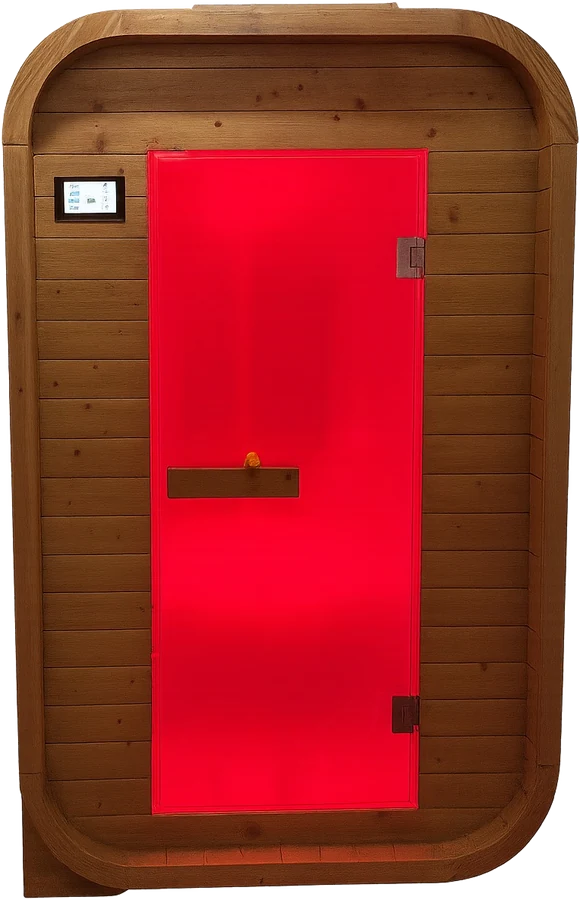
A 30-minute, full-spectrum infrared session inside a single-occupant cabin with near, mid, and far-infrared wavelengths, and an optional ozone layer. For recovery, circulation, detox, and cardiovascular wellness support.
Using Infrared Sauna Cabin
What it is
An infrared sauna session is 30 minutes in a single-occupant cabin that uses infrared wavelengths to warm your body from within, at a lower ambient temperature than a traditional steam sauna. The session is gentle, fully tolerated by most members, and supports a range of wellness goals from recovery to sleep to cardiovascular conditioning.
How it works
Inside the cabin, full-spectrum infrared heaters emit wavelengths that your skin absorbs directly. Your core body temperature rises gently, your sweat response opens, and your circulation widens. The cabin runs at 43 to 60 degrees Celsius, mild compared to a steam sauna’s 80 to 90, which is why most people find infrared sessions easier on the breath and the heart, and why it suits longer sittings.
You sit on a towel, breathe normally, and let the session work. Most members notice a calm, full-body warmth and a generous sweat by the 15-minute mark.
We do not claim that these sessions treat any medical condition. We use the equipment as its maker designed it. If you want the fuller picture, including where the evidence is thin, read our Science page.
Who this is not for
Infrared sauna sessions are non-invasive and well tolerated by healthy adults. The 30-minute session length and the temperatures we run are within the standard wellness range.
Infrared sauna is not appropriate during pregnancy, with severe cardiovascular conditions, with poorly controlled blood pressure, or under the influence of alcohol or sedating medication. Hydration before and after sessions is essential. Please share any medical context at intake.
Members with chronic conditions should clear use with their physician.
What actually happens
Arrival, brief intake (5 minutes). Change in the private room. Hydrate before entering the cabin. Session is 30 minutes inside the cabin. Cool-down and rehydration after. Total time at the centre: about 45 minutes including changing and shower.
We recommend a clean cotton outfit for the session. Towels are provided.
Cadence: most members do one or two sessions per week. Athletes in a training block may do three.
Questions people ask
- Can infrared sauna therapy aid in weight loss?
- While it can promote temporary water weight loss through sweating, it should complement a healthy diet and exercise for sustainable weight management.
- Is it safe to use an infrared sauna daily?
- Daily use is generally safe for healthy individuals, but it's advisable to start with fewer sessions and monitor how your body responds.
- What should I wear during a session?
- Light clothing or a towel is recommended to allow infrared heat to penetrate the skin effectively.
- Can I use an infrared sauna if I'm pregnant?
- Pregnant women should consult their healthcare provider before using an infrared sauna, as elevated body temperatures may pose risks.
- How does an infrared sauna differ from a traditional sauna?
- Infrared saunas use light to heat the body directly, operating at lower temperatures, while traditional saunas heat the air to warm the body indirectly.
- Are there any side effects?
- Some individuals may experience lightheadedness or dehydration; staying hydrated and limiting session duration can mitigate these effects.
- Can infrared sauna therapy improve skin conditions?
- Improved circulation and detoxification may benefit skin health, but individuals with specific skin conditions should consult a dermatologist.
- Is it suitable for individuals with arthritis?
- Infrared heat can alleviate joint pain and stiffness, making it beneficial for some individuals with arthritis.
- How do I prepare for a session?
- Stay hydrated, avoid heavy meals beforehand, and wear comfortable clothing to maximize the benefits of the session.
This is layered into a plan, not booked on its own
It comes after a Frequency Mapping session, which is where we work out whether it belongs in your plan at all, and what it should sit alongside.